Learn about the physical and chemical properties of polypropylene staple fibers!
1. Form The longitudinal surface of polypropylene fiber is straight and smooth, and the cross-section is circular.
2. Density The biggest advantage of polypropylene is its light texture. Its density is only 0.91g/cm3, which is the lightest variety among common chemical fibers. Therefore, polypropylene of the same weight can obtain a higher coverage area than other fibers.
3. Strong elongation Polypropylene has high strength, long elongation, high initial modulus and excellent elasticity. So polypropylene has good abrasion resistance. In addition, the wet strength of polypropylene is basically equal to the dry strength, so it is an ideal material for making fishing nets and cables.
4. Light hygroscopicity and dyeing properties, good warmth retention; almost no hygroscopicity, but strong heart absorbing ability, obvious moisture absorption and perspiration; polypropylene has very little hygroscopicity, almost no moisture absorption, and the moisture regain rate under general atmospheric conditions is close to zero . But it has a wicking effect, passing water vapour through the capillaries in the fabric, but does not have any absorption effect on its own. Polypropylene has poor dyeability and incomplete chromatogram, but it can be compensated by the method of dope dyeing.
5. Acid and alkali resistance Polypropylene has good chemical corrosion resistance. Except for concentrated nitric acid and concentrated caustic soda, polypropylene has good resistance to acid and alkali, so it is suitable for use as filter material and packaging material.
6. High strength The strength of polypropylene elastic yarn is second only to nylon, but the price is only 1/3 of nylon; the fabric is dimensionally stable, wear-resistant elasticity is also good, and chemical stability is good. However, it has poor thermal stability, is not resistant to sunlight, and is prone to aging and brittle damage. For this reason, anti-aging agents are often added to polypropylene fibers.
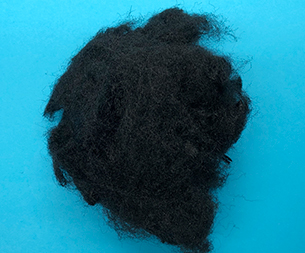
Compared with polyamide fibers, polyester fibers, and viscose fibers, polypropylene staple fibers have their own advantages and characteristics. Polypropylene staple fibers use polypropylene resin as the main raw material. Colored and colorless fluffy fibers with specified denier and length in the process of packaging, packaging and other processes.
So what are the high-quality properties of polypropylene staple fiber? Lightweight, its density is 0.9-0.92 g/cm3, the lightest among all synthetic fibers, it is 20% lighter than polyamide fiber, 30% lighter than polyester fiber, and 40% lighter than viscose fiber; strength High (dry state and wet state), good abrasion resistance and resilience; anti-microbial, no mildew or moth; chemical resistance is also better than general synthetic fibers. In addition, compared with other synthetic fibers, polypropylene fiber has the best electrical insulation and warmth retention, it has a high electrical resistivity (7×10¹⁹ ohm·cm) and a small thermal conductivity.
However, polypropylene staple fiber has a low melting point (165-173 °C) and poor light and thermal stability, so polypropylene fiber has poor heat resistance and aging resistance. Usually, heat stabilizers and anti-aging agents are added to improve its performance. Its hygroscopicity and dyeability are the worst among synthetic fibers, the moisture regain is less than 0.03%, and ordinary dyes can not make it color. coloring.
- Collaborative Value Of Polypropylene Staple‑fiber Supply Chain Under Industrial Non‑woven Development
- Modification Trends And Practical Selection Tips Of Polypropylene Staple Fibers
- Customization Trend of Technical Polypropylene Fibers
- Application and Grades of Polypropylene Staple Fibers
- Quality And Delivery Considerations Of Polypropylene Staple Fibers For Foreign Trade Orders
- Process Points Of Polypropylene Staple Fibers For Needle‑Punched Non‑Woven Fabrics
- Practical Guide for Storage and Pre‑Feeding Inspection of Polypropylene Staple Fibers
- Selection Tips for Polypropylene Staple Fibers to Match Non‑Woven Processes
- Polypropylene Staple Fiber for Hygiene & Auto Interiors: Indexes Not Interchangeable
- What should be noted when purchasing polypropylene staple fibers for the project?
- Markets
- Automotive Products
- Nonwoven Lining
- Geosynthetics
- Liquid Filtration
- Apparel and Textiles
- Hygiene Products
- Building and Construction
- Other Markets
- Contact Us
- Contact Haibang