
In fields such as construction engineering, geotechnical materials and non-woven fabric manufacturing, the dispersion and durability of fibers directly affect the overall performance of the materials. Jiangsu Haibang New Materials Co., Ltd. has been engaged in the research and production of polypropylene staple fibers for a long time, providing fiber raw materials for applications such as concrete crack resistance, geotextiles, filtration materials, and automotive interiors.
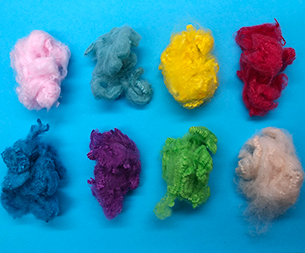
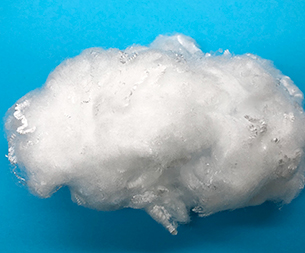
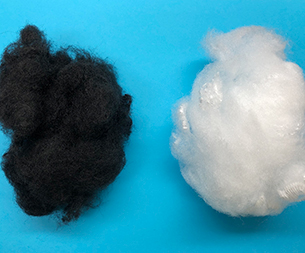
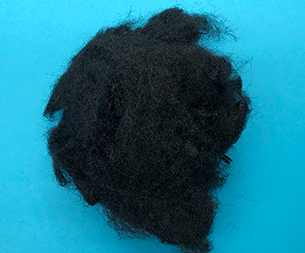
Polypropylene staple fibers are short-length fibers produced by melting and spinning, stretching, curling, and cutting from polypropylene as the raw material. Compared with natural fibers or other synthetic fibers, polypropylene staple fibers have a lower density and can float on the water surface, which is conducive to uniform dispersion during the stirring process. At the same time, polypropylene does not absorb water and has an extremely low moisture absorption rate, making it less prone to mold and deterioration in humid environments. Jiangsu Haibang has developed multiple specifications of polypropylene staple fibers according to the needs of different downstream industries. The fineness range is from 1.5D to 30D, and the cutting length can be adjusted from 3mm to 100mm as per demand.
From the perspective of production process, the quality of Polypropylene staple fibers is affected by spinning temperature, cooling air conditions, drawing ratio and curling setting parameters. Jiangsu Haibang has equipped online detection equipment on the production line to conduct process control over indicators such as fiber linear density deviation, breaking strength, elongation rate, and oil content. For polypropylene staple fibers used for concrete crack resistance, the company adopts a special surface treatment process to enhance the fiber's adhesion in the cement matrix, thereby reducing the probability of shrinkage cracks.
In construction projects, Polypropylene staple fibers are added as secondary reinforcement materials to mortar or concrete. After adding a certain amount of polypropylene short fibers to each cubic meter of concrete, the width and number of plastic shrinkage cracks will significantly decrease. Compared with traditional steel wire mesh, polypropylene short fibers are easier to install, as they can be directly poured into the mixing truck without the need to lay steel mesh sheets. They are particularly suitable for concrete projects such as floors, slopes, and tunnel linings.
In the non-woven fabric field, Polypropylene staple fibers are used in the short fiber layers of needle-punched geotextiles, hot-rolled non-woven fabrics, and spunbond non-woven fabrics. The polypropylene short fibers in the needle-punched geotextiles form a three-dimensional mesh structure after loosening and combing, enabling the geotextiles to have filtering, drainage, and isolation functions. The polypropylene short fibers produced by Jiangsu Haibang have low static electricity during the process of being combed into a net, and are not prone to缠绕 the roller surface, ensuring the production efficiency of users. The polypropylene short fibers used in automotive interiors can also be added with flame retardant or antibacterial functions to meet the safety standards of automotive materials.
- From Materials to Applications: New Changes Emerging in the Polypropylene Fiber Industry
- Polypropylene Staple Fiber Applications Are Becoming More Specialized
- Industrial Supporting Refinement Upgrades, Polypropylene Staple Fiber Breaks Universal Limitations for Specialized Matching
- Industrial Production Accelerates in September|Jiangsu Haibang New Materials Consolidates Non-woven Industry Supply with Polypropylene Staple Fiber
- Evolving Demands of Technical Textiles Drive Custom‑Functional Development of Polypropylene Staple Fiber
- Polypropylene Staple Fiber for Diverse Downstream Industries, Functional Chemical Fibers Boost Technical Textile Upgrading
- Expanded Downstream Segments Push Polypropylene Staple Fiber Toward Functional Customization
- Polypropylene Staple Fiber, Versatile Base Chemical‑fiber Material for Industrial Textiles
- Polypropylene Staple Fiber Industry Advances Steadily as Differentiated Applications Drive Service Improvement
- Polypropylene Staple Fibers Support Industrial Growth — Jiangsu Haibang New Material Earns Market Recognition Through Quality
- Markets
- Automotive Products
- Nonwoven Lining
- Geosynthetics
- Liquid Filtration
- Apparel and Textiles
- Hygiene Products
- Building and Construction
- Other Markets
- Contact Us
- Contact Haibang