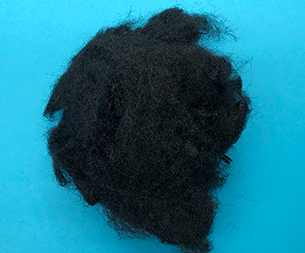
Among the family of chemical fibers, one material, with its unique lightness and strength, has quietly permeated every aspect of our lives—PP Staple Fiber. This short fiber, made from polypropylene, may not be as well-known as polyester or nylon, but it has secured a foothold in numerous industrial and civilian fields thanks to a series of irreplaceable properties.
A particularly outstanding advantage of PP Staple Fiber is its lightness. Polypropylene has one of the lowest densities among common resins, making products made from polypropylene staple fiber exceptionally lightweight. At the same time, it possesses good strength and abrasion resistance, as well as high chemical stability and resistance to acid and alkali corrosion. Notably, polypropylene has excellent hydrophobicity; water cannot penetrate the fiber, resulting in extremely low moisture absorption and rapid drying. These properties form the basis for its widespread application.
Currently, the core applications of PP Staple Fiber are mainly concentrated in two areas. In the field of nonwoven fabrics, it is an important raw material for the production of hygiene materials (such as baby diapers and sanitary napkin fabrics), medical supplies, home textiles (such as sofa fillings and carpet backings), and geotextiles. Its hydrophobic, quick-drying, and mildew-resistant properties make it excellent in disposable or durable products. On the other hand, in the traditional textile industry, polypropylene staple fiber is often used as a blending material in industrial products such as cables, filter cloths, and thermal insulation fillers, as well as in civilian textiles such as thermal underwear and sports socks, utilizing its lightweight and warm properties.
With technological advancements, the functions of PP Staple Fiber are constantly expanding. Through modification, its dyeability and anti-aging properties can be improved, or it can be endowed with special functions such as antistatic and flame retardant properties. This makes the application potential of polypropylene staple fiber increasingly prominent in emerging fields such as high-end filter materials, environmentally friendly packaging, and new energy vehicle interiors.
From the details of daily life to the textures of major engineering projects, polypropylene staple fiber plays an indispensable role with its solid performance and economical cost. It may be unassuming, but it is precisely this pragmatism and reliability that allows it to continuously radiate vitality and value in modern industry.
- From Materials to Applications: New Changes Emerging in the Polypropylene Fiber Industry
- Polypropylene Staple Fiber Applications Are Becoming More Specialized
- Industrial Supporting Refinement Upgrades, Polypropylene Staple Fiber Breaks Universal Limitations for Specialized Matching
- Industrial Production Accelerates in September|Jiangsu Haibang New Materials Consolidates Non-woven Industry Supply with Polypropylene Staple Fiber
- Evolving Demands of Technical Textiles Drive Custom‑Functional Development of Polypropylene Staple Fiber
- Polypropylene Staple Fiber for Diverse Downstream Industries, Functional Chemical Fibers Boost Technical Textile Upgrading
- Expanded Downstream Segments Push Polypropylene Staple Fiber Toward Functional Customization
- Polypropylene Staple Fiber, Versatile Base Chemical‑fiber Material for Industrial Textiles
- Polypropylene Staple Fiber Industry Advances Steadily as Differentiated Applications Drive Service Improvement
- Polypropylene Staple Fibers Support Industrial Growth — Jiangsu Haibang New Material Earns Market Recognition Through Quality
- Markets
- Automotive Products
- Nonwoven Lining
- Geosynthetics
- Liquid Filtration
- Apparel and Textiles
- Hygiene Products
- Building and Construction
- Other Markets
- Contact Us
- Contact Haibang