
In the first ten months of 2025, the bilateral trade volume between China and Vietnam exceeded 200 billion US dollars, among which the trade related to textiles and garments accounted for more than 30%, firmly ranking as the second largest trade category. This outstanding performance not only highlights the deep integration of industries between the two countries but also reflects the development trend of win-win cooperation during the "second golden period" of China-Vietnam relations.
From the perspective of trade structure, the textile industries of China and Vietnam have formed a collaborative pattern where "China supplies raw materials and Vietnam does processing". Nearly 30% of Vietnam's exports to China are garments and accessories, while over 40% of China's exports to Vietnam are intermediate products such as yarns and chemical fibers. This division of labor model not only leverages China's advantages in upstream raw materials and technologies, but also aligns with Vietnam's labor cost advantage. In addition, the tariff dividends brought by free trade agreements such as RCEP have further promoted the growth resilience of China-Vietnam textile trade in the complex international economic environment.
The prosperity of trade cannot do without the support of investment. Among China's investment projects in Vietnam, approximately 35% are concentrated in the textile sector, with a total investment of over 12 billion US dollars. In recent years, many Chinese enterprises have continuously increased their industrial layout in Vietnam, with investments covering high-end yarns, fabrics, intelligent weaving and other links, helping Vietnam's textile industry upgrade from "processing-oriented" to "industrial-oriented". Through models such as "one enterprise, two countries, two factories", Chinese and Vietnamese textile enterprises have achieved deep integration of the industrial chain and jointly enhanced their competitiveness in the global market.
The interconnection and interoperability of infrastructure have also injected new impetus into industrial cooperation. Vietnam is actively promoting the construction of cross-border logistics projects such as railways, which is expected to further enhance the circulation efficiency of textile raw materials and finished products. Meanwhile, exchanges between the two countries in areas such as green manufacturing, smart factories, and digital supply chains have become increasingly close, promoting the transformation of cooperation from scale expansion to quality improvement.
The textile cooperation between China and Vietnam has gone beyond a single trade exchange and gradually formed an industrial chain ecosystem featuring deep integration and coordinated development. Against the backdrop of jointly building the Belt and Road Initiative and regional economic integration, the textile industries of the two countries are working hand in hand towards high-end, green and intelligent directions, jointly weaving a new chapter of mutually beneficial and win-win development.
Declaration: The content of this article is compiled from the Internet and the copyright belongs to the original author. If there is any infringement, please inform us in time and contact us for deletion.
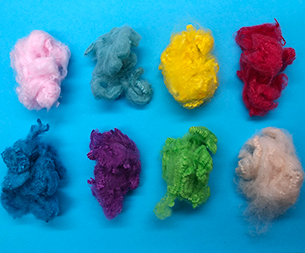
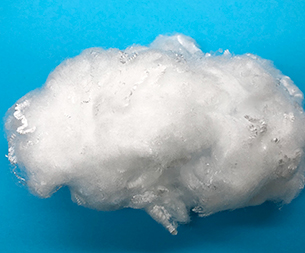
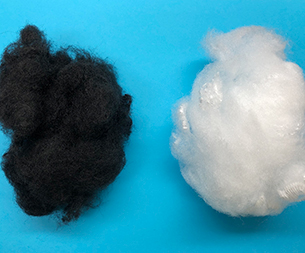
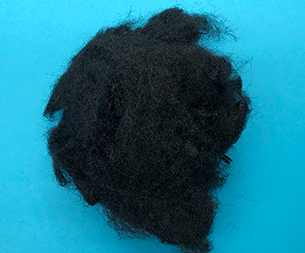
- Industrial Supporting Refinement Upgrades, Polypropylene Staple Fiber Breaks Universal Limitations for Specialized Matching
- Industrial Production Accelerates in September|Jiangsu Haibang New Materials Consolidates Non-woven Industry Supply with Polypropylene Staple Fiber
- Evolving Demands of Technical Textiles Drive Custom‑Functional Development of Polypropylene Staple Fiber
- Polypropylene Staple Fiber for Diverse Downstream Industries, Functional Chemical Fibers Boost Technical Textile Upgrading
- Expanded Downstream Segments Push Polypropylene Staple Fiber Toward Functional Customization
- Polypropylene Staple Fiber, Versatile Base Chemical‑fiber Material for Industrial Textiles
- Polypropylene Staple Fiber Industry Advances Steadily as Differentiated Applications Drive Service Improvement
- Polypropylene Staple Fibers Support Industrial Growth — Jiangsu Haibang New Material Earns Market Recognition Through Quality
- Functional PP Staple Fiber Expands Application Coverage, Upstream & Downstream Chemical Fiber Industries Upgrade Simultaneously
- How to Choose PP Staple Fiber for Procurement? Selection Guide for Multi-Field Fiber Raw Materials
- Markets
- Automotive Products
- Nonwoven Lining
- Geosynthetics
- Liquid Filtration
- Apparel and Textiles
- Hygiene Products
- Building and Construction
- Other Markets
- Contact Us
- Contact Haibang