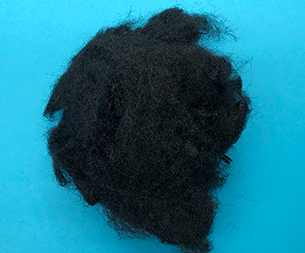
In the fields of geotechnical materials, automotive interiors, and various textiles, polypropylene staple fibers serve as a fundamental and crucial raw material. Their quality directly affects the performance and lifespan of the end products. When faced with numerous choices in the market, purchasing friends often have some technical questions. Today, Jiangsu Haibang New Materials, based on its years of production and research and development experience, will answer several core questions about polypropylene staple fibers for everyone.
How can the strength and durability of polypropylene staple fibers be guaranteed?
Many customers are concerned that the fibers may age or break over time. High-quality polypropylene short fibers are processed through precise manufacturing techniques that control the orientation of molecular chains, thereby endowing the fibers with excellent tensile strength and tensile resistance. Additionally, to cope with the challenges of sunlight and high temperatures in outdoor or complex environments, we incorporate anti-aging additives at the raw material stage, effectively enhancing the weather resistance of the polypropylene short fibers. This inherent quality control ensures that the fibers, after being made into geotextiles, car carpets, or filtration materials, can maintain a stable physical state and extend the service life of the end products.
How is the uniformity and processing performance of the fibers?
In large-scale automated production, the uniformity of the fibers directly affects the weaving efficiency. Habin New Materials adopts an advanced fully automatic production line, which can ensure that the fineness, length, and curl of polypropylene staple fibers remain highly consistent. This excellent uniformity not only reduces the cotton shedding rate in the downstream customers' opening and combing processes, but also effectively avoids the occurrence of yarn breaks or fabric defects. Moreover, polypropylene itself has excellent acid and alkali resistance and hydrophobic properties, and hardly absorbs moisture, which enables it to maintain dryness and stable processing performance even in humid environments or chemical filtration scenarios.
Selection suggestions
When purchasing polypropylene staple fibers, it is recommended that you consider the fiber's linear density, length, and functional requirements based on the specific application scenarios of the end product (such as geotextiles, automotive interiors, non-woven fabrics, or carpets). If it is used to reinforce concrete or geotechnical materials, it is advisable to focus on its tensile strength and modulus; if it is used in automotive interiors or home textiles, you can pay particular attention to its softness, crimp and fluffiness, as well as environmental indicators.
If you want to learn more about the products, please visit Jiangsu Haibang New Materials Co., Ltd. (website: www.ppstaplefiber.com ) or contact the company directly for inquiries. We will provide you with professional and efficient service support!
- Industrial Supporting Refinement Upgrades, Polypropylene Staple Fiber Breaks Universal Limitations for Specialized Matching
- Industrial Production Accelerates in September|Jiangsu Haibang New Materials Consolidates Non-woven Industry Supply with Polypropylene Staple Fiber
- Evolving Demands of Technical Textiles Drive Custom‑Functional Development of Polypropylene Staple Fiber
- Polypropylene Staple Fiber for Diverse Downstream Industries, Functional Chemical Fibers Boost Technical Textile Upgrading
- Expanded Downstream Segments Push Polypropylene Staple Fiber Toward Functional Customization
- Polypropylene Staple Fiber, Versatile Base Chemical‑fiber Material for Industrial Textiles
- Polypropylene Staple Fiber Industry Advances Steadily as Differentiated Applications Drive Service Improvement
- Polypropylene Staple Fibers Support Industrial Growth — Jiangsu Haibang New Material Earns Market Recognition Through Quality
- Functional PP Staple Fiber Expands Application Coverage, Upstream & Downstream Chemical Fiber Industries Upgrade Simultaneously
- How to Choose PP Staple Fiber for Procurement? Selection Guide for Multi-Field Fiber Raw Materials
- Markets
- Automotive Products
- Nonwoven Lining
- Geosynthetics
- Liquid Filtration
- Apparel and Textiles
- Hygiene Products
- Building and Construction
- Other Markets
- Contact Us
- Contact Haibang