
At present, China's textile industry is at a critical period of profound transformation. While maintaining stable growth, the industry is also confronted with the dual tests of internal structural differentiation and the reshaping of external green trade rules. Its future development path is clearly pointing to a transformation direction centered on the synergy of technological innovation and green digitalization.
Core driving force: From technological innovation to brand elevation
Technology and brand have become the dual engines driving the development of the industry. Today's technological innovation has fully permeated the upstream and downstream of the industrial chain.
At the source of fibers, the industry is committed to developing intrinsic multifunctional composite fibers that integrate antibacterial, flame-retardant and temperature-regulating properties, demonstrating a disruptive innovation starting from the material end.
At the production design end, artificial intelligence technology is transforming the traditional model. Meanwhile, brand building is evolving from merely focusing on manufacturing advantages to exploring cultural value and creating scene experiences. Enterprises have begun to deeply integrate regional culture with intangible cultural heritage inheritance, transforming products from functional carriers into cultural symbols. By expanding new scenarios such as home and outdoor, they are meeting the diversified demands brought about by consumption upgrades.
Real challenges: Structural differentiation and new green regulations
Despite the broad prospects, the industry still faces severe internal and external challenges. There is a clear structural differentiation within the company: the sports and industrial textiles sectors are experiencing strong growth, while some traditional chemical fibers and clothing sectors are facing greater pressure for transformation, which puts forward higher requirements for the precise positioning of enterprises.
The external challenges are more profound. The new global green regulations represented by the EU's "Eco-Design Regulation for Sustainable Products" are reshaping the threshold of international trade. These regulations not only require the products themselves to be environmentally friendly, but also enforce data transparency and traceability throughout the entire supply chain process through tools such as product digital passports. This has evolved from a "green barrier" into a "technical rule" that determines market access, requiring the industry to undergo systematic upgrades.
Future path: The symbiotic synergy of green and digital
To address the challenges, the industry's transformation path focuses on two core areas:
The deep integration of greenness and digitalization: Product digital passports are a concentrated manifestation of this trend. It requires the establishment of a digital archive for each product throughout its entire life cycle, including design, production and recycling, to achieve visual traceability of the supply chain. This marks that environmental management has shifted from end-of-pipe treatment to a systematic ecological construction covering the entire chain.
Adhere to self-reliance and self-strengthening, and serve the dual circulation pattern: The core of the industry is to enhance international competitiveness through independent innovation. This means achieving technological breakthroughs in key fiber materials and high-end equipment, while leveraging the advantages of the domestic market to deepen brand connotations and build the domestic circulation into a solid foundation. Ultimately, through the export of technology and global layout, the upgraded industrial chain will be better integrated into the world economy.
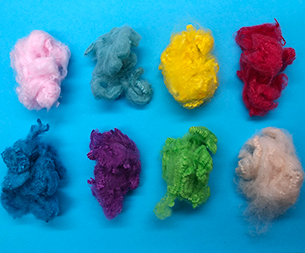
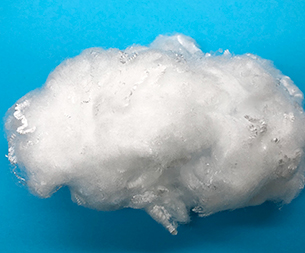
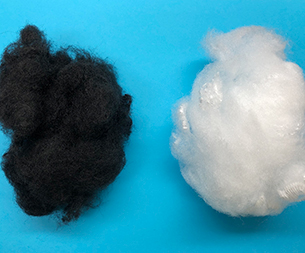
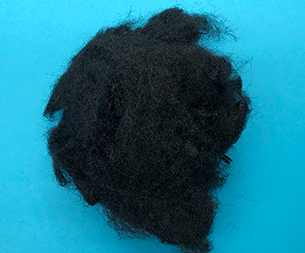
- Industrial Supporting Refinement Upgrades, Polypropylene Staple Fiber Breaks Universal Limitations for Specialized Matching
- Industrial Production Accelerates in September|Jiangsu Haibang New Materials Consolidates Non-woven Industry Supply with Polypropylene Staple Fiber
- Evolving Demands of Technical Textiles Drive Custom‑Functional Development of Polypropylene Staple Fiber
- Polypropylene Staple Fiber for Diverse Downstream Industries, Functional Chemical Fibers Boost Technical Textile Upgrading
- Expanded Downstream Segments Push Polypropylene Staple Fiber Toward Functional Customization
- Polypropylene Staple Fiber, Versatile Base Chemical‑fiber Material for Industrial Textiles
- Polypropylene Staple Fiber Industry Advances Steadily as Differentiated Applications Drive Service Improvement
- Polypropylene Staple Fibers Support Industrial Growth — Jiangsu Haibang New Material Earns Market Recognition Through Quality
- Functional PP Staple Fiber Expands Application Coverage, Upstream & Downstream Chemical Fiber Industries Upgrade Simultaneously
- How to Choose PP Staple Fiber for Procurement? Selection Guide for Multi-Field Fiber Raw Materials
- Markets
- Automotive Products
- Nonwoven Lining
- Geosynthetics
- Liquid Filtration
- Apparel and Textiles
- Hygiene Products
- Building and Construction
- Other Markets
- Contact Us
- Contact Haibang